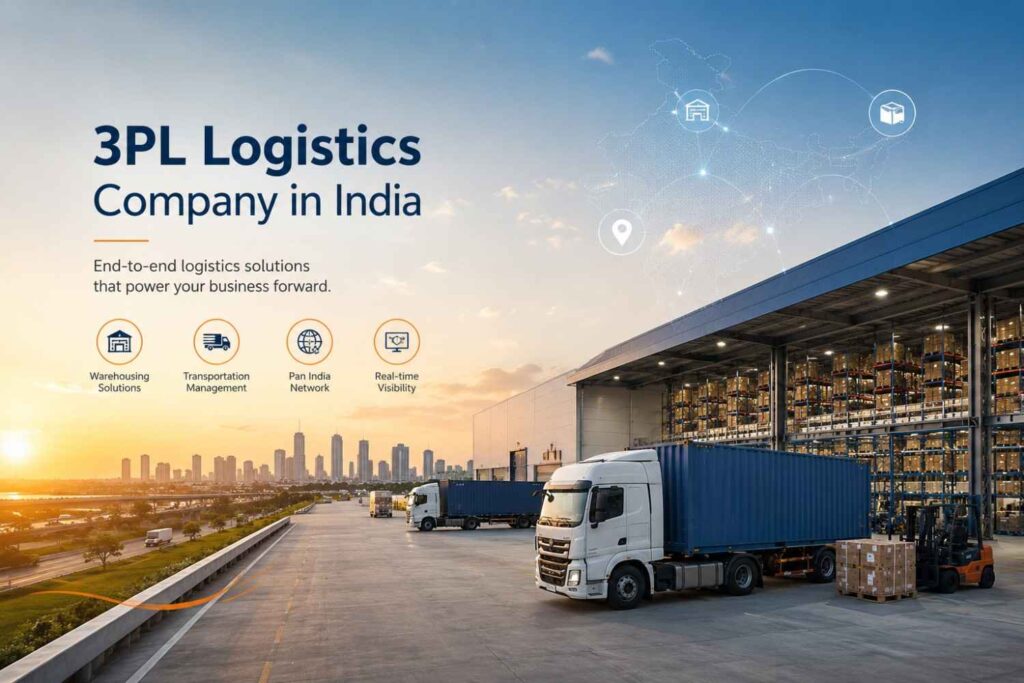
Selecting a 3PL logistics company in India becomes difficult when the operation moves beyond simple transportation. A logistics team may need warehousing in one region, inventory control in another, reliable freight movement, order fulfillment, returns management and visibility across all of it. On paper, many providers appear capable of handling these requirements. The operational reality can be very different.
The real test comes when shipment volumes increase, inventory starts moving quickly, a key customer changes its delivery schedule, or a warehouse receives more stock than expected. This is where most businesses discover whether their logistics partner is genuinely capable or simply good at selling a service.
For logistics professionals, the right 3PL decision should therefore be based on operating fit rather than brand size. A provider needs to match the company’s shipment profile, warehouse requirements, technology environment, service geography and growth plans.
This article looks at 3PL from that practical angle, including the areas that usually create friction after implementation and the factors worth testing before committing to a long-term logistics arrangement.
The Indian 3PL Market Is Becoming More Operationally Demanding
Indian logistics has become more complicated as businesses expand beyond their traditional markets. Manufacturers are distributing through wider dealer networks, eCommerce businesses are managing larger order volumes, and D2C brands increasingly need inventory positioned closer to customers.
This has changed what companies expect from outsourced logistics.
A warehouse is no longer simply a place to keep stock. It may need to receive goods, inspect them, store them by location or batch, process orders, coordinate dispatches, handle returns and provide inventory information to the business.
Transportation has also become more connected to warehousing. A delay in order processing can affect the dispatch schedule, which affects the customer’s delivery commitment. When these activities are handled by different vendors, someone inside the business has to coordinate all of them.
That is one reason 3PL adoption makes sense. The objective is not simply to outsource labour or storage. It is to reduce the number of operational handoffs the internal logistics team has to manage.
What a 3PL Logistics Company in India Should Actually Take Responsibility For
A capable 3PL should have clearly defined ownership across the activities it manages.
Take a manufacturer supplying products to distributors across several states. The company may need inbound receiving, warehouse storage, inventory reconciliation, order processing, transportation planning and proof of delivery. If the 3PL manages only the warehouse while the manufacturer’s team continues coordinating every transport exception and inventory discrepancy, much of the expected value of outsourcing has been lost.
This is where end-to-end 3PL logistics services can become useful. The advantage comes from connecting multiple logistics activities under a defined operating model.
However, end-to-end does not automatically mean better. Businesses sometimes outsource processes that they already manage efficiently, only to introduce additional coordination and cost.
The better question is: which parts of the operation are creating the most friction internally?
If warehouse management is consuming management time, outsource it. If transportation procurement is fragmented across multiple regions, a 3PL may help. If the business already has strong warehousing capabilities but struggles with last-mile distribution, a full 3PL contract may be unnecessary.
Good logistics outsourcing starts with identifying the problem, not with choosing a package.
Inventory Accuracy Is Often More Important Than Warehouse Size
One of the most overlooked areas when selecting a 3PL is inventory discipline.
A large warehouse with impressive infrastructure is not particularly useful if the system says stock is available but the warehouse team cannot locate it. For businesses with hundreds or thousands of SKUs, even small process weaknesses can create frequent discrepancies.
Effective inventory management logistics services should cover receiving, put-away, location control, picking, cycle counting, reconciliation and dispatch confirmation.
Technology helps, but it is not the complete solution. Barcode scanning, warehouse management systems and automated reports cannot compensate for poor physical processes.
In reality, inventory problems usually become visible at the worst possible time. A customer order arrives, the system shows ten units available, and the warehouse finds seven. Now the issue is no longer a warehouse problem. Sales, customer service and finance may all become involved.
This is why logistics teams should ask potential providers how inventory discrepancies are investigated, how frequently cycle counts are performed and who is accountable when physical and system stock do not match.
Those answers often reveal more about operational maturity than a presentation about warehouse automation.
Why the Lowest 3PL Rate May Not Be the Lowest Logistics Cost
Pricing discussions can become overly focused on storage and handling rates.
A provider may quote an attractive warehouse rate while charging separately for inbound handling, packaging, additional labour, returns, special processing, transportation or other value-added activities. Another provider may have a higher base rate but include more of the activities the business actually needs.
This is where affordable 3PL logistics solutions should be evaluated differently.
Affordability should mean that the total cost of operating the logistics model is sensible for the service level required. It does not necessarily mean selecting the lowest line item in a quotation.
Consider two warehouses. Provider A is cheaper per pallet but has slower order processing and requires frequent manual reconciliation. Provider B costs slightly more but maintains stronger inventory accuracy and dispatch discipline.
If Provider A creates more customer complaints, urgent stock checks and manual work for the internal logistics team, the original saving may disappear.
A useful commercial comparison should therefore include storage, inbound and outbound handling, transportation, returns, packaging, technology, additional labour and exception-related costs.
The question is not “Who has the cheapest rate?” It is “What does the complete operating model cost?”
Technology Should Solve Operational Problems
Almost every modern 3PL provider talks about technology. WMS, TMS, APIs, real-time tracking and analytics are now common terms in logistics proposals.
But logistics teams should focus on what these systems actually change.
A warehouse management system should improve control over inventory movements and order processing. Transportation technology should help manage carrier allocation, freight visibility and delivery exceptions. API integration should reduce duplicate data entry between the customer’s ERP and the logistics provider.
The useful test is simple: does the technology reduce manual work or improve decision-making?
If a logistics manager still has to maintain separate spreadsheets to understand inventory, dispatch status and pending exceptions, having several dashboards has not solved much.
Good technology should bring the information closer to the decision. If a shipment is delayed, the team should know why. If a particular route consistently creates exceptions, the data should make that pattern visible. If stock is sitting too long in one location, the business should be able to identify it before the problem becomes a working-capital issue.
Technology should support the operation. It should not become another operation to manage.
Choosing a Third Party Logistics Service Provider Is an Operational Decision
Selecting a third party logistics service provider requires more than comparing proposals from several companies.
Start by understanding your own operation. Shipment weight, dimensions, SKU count, order frequency, warehouse requirements and delivery geography all affect the suitability of a provider.
A company shipping industrial components in palletised loads has a very different requirement from an eCommerce business processing thousands of small orders. Similarly, a business serving distributors may prioritise scheduled B2B deliveries, while a D2C brand may care more about order cut-off times, parcel tracking and returns.
Geography deserves particular attention. A provider may have a wide network, but that does not mean every location receives the same service quality. A logistics team should test actual origin and destination lanes instead of relying only on network claims.
The same principle applies to service-level agreements. “Fast delivery” is not a useful SLA. Define what delivery performance means, how exceptions are reported and who owns the escalation.
A practical evaluation approach
- Map your real shipment lanes, SKUs and warehouse requirements.
- Calculate total logistics cost instead of comparing only headline rates.
- Test inventory controls and discrepancy-management procedures.
- Verify WMS, ERP, API and reporting compatibility.
- Review capacity during seasonal and promotional peaks.
- Define measurable SLAs and escalation responsibilities.
- Run a pilot before transferring the entire operation.
The pilot matters because operational weaknesses often remain hidden during procurement. A few weeks of real orders can reveal problems that several sales meetings never expose.
Why Businesses Often Need More Than One Logistics Partner
There is a strong argument for using multiple logistics providers when the business operates across different shipment types or regions.
One provider may be stronger in B2B freight, another in parcel delivery, and another may have better economics on a particular long-distance lane. Geographic performance can also vary.
For example, a logistics team may use one partner for regional distribution, another for eCommerce orders and a third for specialised freight. This can improve flexibility and reduce dependence on a single provider.
But there is a cost to that flexibility.
Multiple providers mean multiple systems, contracts, escalation channels, invoices and performance reports. Without proper integration, the internal logistics team can spend more time coordinating carriers than managing the supply chain.
A multi-provider model therefore works best when the business has a clear reason for using each provider and a central process for managing performance.
For some businesses, a logistics aggregator or integrated 3PL model can reduce this coordination burden by bringing multiple transportation capabilities into a single operating framework.
What Logistics Teams Should Watch in 2026
The 3PL sector is moving toward more data-driven and integrated operations.
Inventory positioning is becoming increasingly important as businesses try to balance delivery speed with carrying costs. Instead of simply adding warehouses, companies are looking more closely at where inventory should sit and how frequently it should move between locations.
Automation will also continue expanding within warehouses, especially around repetitive processes such as scanning, sorting and inventory handling. Yet automation will not remove the need for experienced operations teams. Exceptions, unusual shipments, damaged goods and sudden demand changes still require judgement.
Another important shift is deeper integration between logistics systems and business systems. Logistics data is becoming more useful when it feeds directly into inventory planning, customer service and financial reporting.
For logistics professionals, this means the role of a 3PL is gradually moving beyond physical execution. The provider is increasingly expected to contribute operational visibility and useful data.
The strongest providers will be those that can turn that data into better decisions rather than simply producing more reports.
Conclusion
A 3PL logistics company in India should be selected according to the actual operating requirements of the business, not simply its network size or quoted price.
The right partner can reduce infrastructure requirements, improve inventory discipline, simplify transportation coordination and provide the capacity needed for growth. The wrong one can create another layer of operational complexity that the internal logistics team has to constantly manage.
Before signing a long-term agreement, businesses should test actual lanes, warehouse processes, inventory controls, technology integration, pricing and service-level commitments. A pilot is often the most useful part of the evaluation because it shows how the provider behaves when real orders, real exceptions and real deadlines are involved.
Companies considering 3PL logistics services in India should also decide how much of their logistics operation they genuinely need to outsource. Full outsourcing is not always the best answer.
For businesses evaluating OnPoint Logistics, the relevant question should be how its warehousing, inventory, fulfillment and transportation capabilities fit the specific operating model.
Ultimately, a good 3PL relationship should make logistics easier to control. If the internal team spends less time chasing stock, shipments and exceptions, the partnership is doing what it was supposed to do.
FAQs
- What does a 3PL logistics company in India do?
Ans. A 3PL manages logistics activities for businesses, which may include warehousing, inventory management, order fulfillment, transportation, distribution and returns. The exact scope depends on the contract and operating model.
- How do I choose the right 3PL provider?
Ans. Evaluate the provider against your actual shipment profile, SKU complexity, warehouse requirements, delivery geography, technology needs, SLAs and total cost. A pilot using real shipments is often more useful than relying only on a commercial presentation.
- What are inventory management logistics services?
Ans. These services cover receiving, storing, tracking, counting, picking and dispatching inventory. Strong inventory controls help businesses maintain accurate stock visibility and reduce discrepancies that can affect fulfillment and customer service.
- Are affordable 3PL logistics solutions always the cheapest?
Ans. No. A lower warehouse or handling rate may be offset by additional labour, returns, packaging, transportation or exception costs. Compare the complete cost of operating the logistics model rather than one quoted rate.
- What are end-to-end 3PL logistics services?
Ans. End-to-end 3PL services combine several logistics activities under one operating model, such as warehousing, inventory management, fulfillment, transportation and distribution. They can be useful when managing these activities separately creates excessive coordination work.