How Can a Hospital Recovery Room Promote Patient Safety?
Introduction
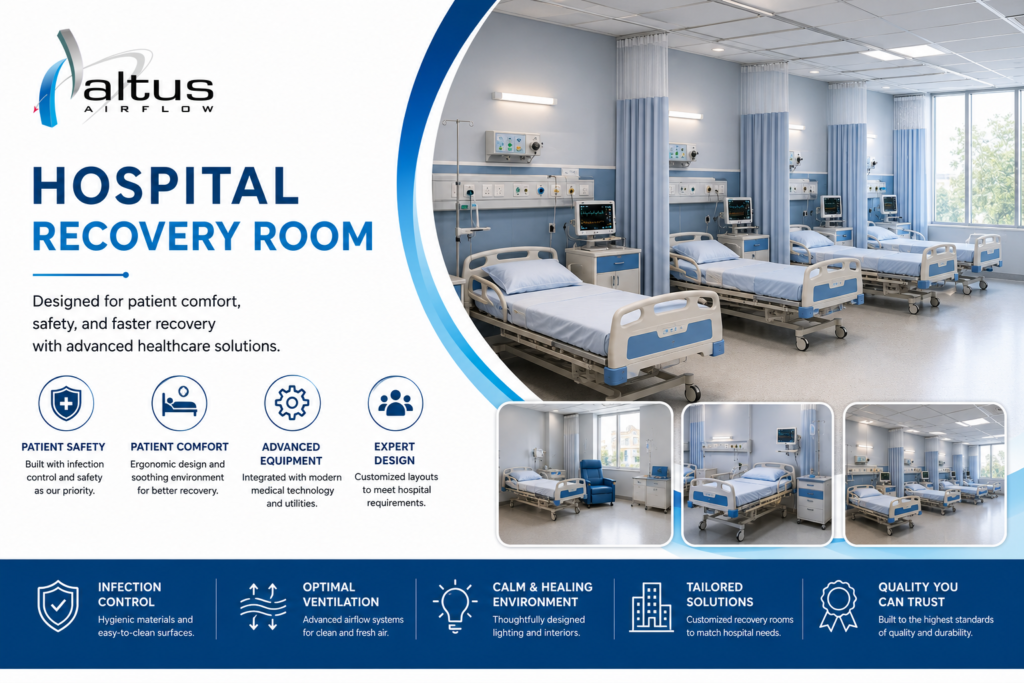
A Hospital Recovery Room plays an important role in patient safety following surgery, anesthesia, sedation, or other procedures. During this period, patients may still be affected by anesthesia and require close observation of breathing, circulation, consciousness, temperature, and pain. A well-planned recovery environment combines appropriate monitoring systems, medical equipment, emergency facilities, infection-control measures, reliable utilities, and trained healthcare professionals. Safety depends on both the physical environment and the clinical protocols followed by the healthcare team.
Continuous Patient Monitoring
Continuous or appropriately frequent monitoring is one of the primary safety measures in a recovery room.
Healthcare professionals can observe vital parameters such as heart rate, blood pressure, oxygen saturation, respiratory rate, and temperature.
Monitoring helps staff identify changes that may require further clinical assessment.
Respiratory Support
Patients recovering from anesthesia can experience changes in breathing.
A recovery room should provide appropriate access to oxygen delivery systems, suction equipment, airway management devices, and respiratory support equipment according to clinical requirements.
Quick access to these resources can support timely intervention.
Oxygen and Medical Gas Systems
Reliable medical gas infrastructure supports respiratory care.
Oxygen, medical air, and vacuum outlets can be positioned near patient beds, with suitable pressure regulation and alarm systems.
Proper installation and maintenance of these systems are important for safe operation.
Emergency Equipment
Patient conditions can change unexpectedly after procedures.
A recovery facility should have appropriate emergency resources based on its clinical scope. These may include defibrillators, crash carts, resuscitation equipment, airway devices, suction systems, and emergency medications.
Equipment should remain accessible to trained healthcare professionals.
Safe Patient Identification
Correct patient identification is an important part of post-operative safety.
Healthcare professionals follow established identification procedures before medications, treatments, transfers, and other clinical interventions.
Clear documentation and communication help reduce the possibility of identification errors.
Medication Safety
Patients may receive medications for pain, nausea, infection prevention, or other clinical needs.
Medication administration should follow established hospital protocols, including appropriate verification, documentation, dosing, and monitoring.
Infusion pumps and syringe pumps may be used when controlled delivery is required.
Infection Prevention
Infection control is essential in any clinical recovery environment.
Appropriate hand hygiene facilities, cleanable surfaces, suitable ventilation, equipment cleaning, waste management, and controlled access can support infection-prevention practices.
Recovery room procedures should align with the hospital’s infection-control policies.
Adequate Bed Spacing
Proper spacing between patient beds supports both safety and workflow.
Sufficient clearance allows healthcare professionals to reach patients, operate medical equipment, move emergency carts, and perform procedures without unnecessary obstruction.
Privacy curtains can also provide separation while maintaining accessibility.
Reliable Electrical Infrastructure
Monitoring and life-support equipment depend on reliable electrical power.
Medical-grade outlets, grounding protection, emergency circuits, UPS systems, and backup power can help maintain essential equipment during electrical interruptions.
Electrical systems should be installed and maintained according to applicable requirements.
Nurse Call Systems
Nurse call facilities provide a way for patients who are able to communicate to request assistance.
Call points should be conveniently accessible from patient beds and connected to an appropriate nursing or staff area.
Clear Emergency Pathways
Recovery rooms should maintain unobstructed circulation pathways.
Clear routes allow staff to move patients, emergency carts, stretchers, and equipment efficiently.
Equipment and storage should be positioned so they do not block important access routes.
Safe Patient Transfers
Patients may need to move between the operating theatre, recovery room, intensive care unit, ward, or other departments.
Transfer procedures should include appropriate patient identification, clinical handover, monitoring, and equipment support according to the patient’s condition.
Safe handover reduces communication gaps during transitions of care.
Appropriate Ventilation
Ventilation and air quality can contribute to a safe recovery environment.
The facility can incorporate suitable ventilation, filtration, temperature, humidity, and airflow arrangements based on its design and applicable requirements.
These systems can also support infection-control objectives.
Patient Comfort and Positioning
Comfort measures can contribute to safe recovery.
Appropriate beds, positioning support, temperature management, lighting, privacy, and noise control can help create a suitable environment for patients regaining consciousness.
Healthcare professionals can adjust positioning according to the patient’s clinical needs.
Fall Prevention
Some patients may remain drowsy, weak, or disoriented after anesthesia.
Appropriate bed positioning, side rails where clinically indicated, staff assistance, safe transfer procedures, and observation can help reduce fall risks.
The specific precautions should be determined according to the patient’s condition.
Staff Visibility and Workflow
A well-planned layout allows healthcare professionals to observe patients and reach them efficiently.
Nursing stations, monitoring displays, equipment, emergency resources, and storage can be positioned to support visibility and reduce unnecessary movement.
Communication and Handover
Effective communication is an important patient-safety measure.
Information about the procedure, medications, allergies, vital signs, complications, and post-operative requirements should be communicated appropriately during handover.
Communication systems can support coordination between departments.
Equipment Maintenance
Patient-safety systems depend on properly functioning equipment.
Monitoring devices, oxygen systems, suction equipment, emergency devices, electrical infrastructure, and other medical equipment should undergo appropriate inspection, maintenance, testing, and calibration.
Following manufacturer recommendations and hospital maintenance schedules helps support reliability.
Staff Training
Even advanced equipment cannot replace appropriately trained healthcare professionals.
Staff should understand patient monitoring, airway management, emergency response, equipment operation, infection-control practices, and hospital-specific recovery protocols relevant to their responsibilities.
Regular training can help maintain readiness.
Fire and Emergency Safety
Recovery rooms should incorporate suitable fire and life-safety provisions.
Depending on the facility, these may include fire detection and alarm systems, emergency lighting, fire protection equipment, evacuation routes, and accessible exits.
Emergency planning should consider patients who may have limited mobility after procedures.
Documentation and Observation
Accurate documentation supports continuity of care.
Healthcare professionals record relevant observations, monitoring results, medications, interventions, and patient progress according to hospital protocols.
Complete records can help guide subsequent care and transfer decisions.
Appropriate Discharge or Transfer Criteria
Patients should be transferred from recovery only when they meet the applicable clinical criteria established by the healthcare facility.
Healthcare professionals assess factors such as consciousness, breathing, circulation, pain, nausea, and other relevant clinical conditions before transfer.
Conclusion
A Hospital Recovery Room can promote patient safety through continuous monitoring, respiratory support, dependable medical gas and electrical systems, accessible emergency equipment, infection-control measures, safe patient transfers, clear communication, appropriate staffing, equipment maintenance, and well-designed clinical workflows. Safety is not dependent on one device or feature; it results from combining suitable infrastructure with trained healthcare professionals and established clinical protocols.
FAQs
1. How can a Hospital Recovery Room promote patient safety?
A Hospital Recovery Room can promote safety through patient monitoring, respiratory support, emergency equipment, reliable medical gases and electricity, infection-control practices, safe transfers, trained staff, clear communication, and appropriate clinical protocols.
2. Why is continuous monitoring important after surgery?
Monitoring allows healthcare professionals to observe vital signs and identify changes in breathing, circulation, consciousness, or other parameters that may require assessment.
3. What emergency equipment should be accessible?
Depending on the facility’s clinical scope, emergency resources may include defibrillators, crash carts, airway equipment, suction devices, resuscitation equipment, and emergency medications.
4. How does infection control improve recovery room safety?
Hand hygiene facilities, cleanable surfaces, equipment disinfection, appropriate ventilation, waste management, and controlled access can support infection-prevention practices.
5. Why is staff training important in a recovery room?
Trained staff can operate monitoring and emergency equipment correctly, recognize changes in patient condition, follow clinical protocols, and respond appropriately to emergencies.