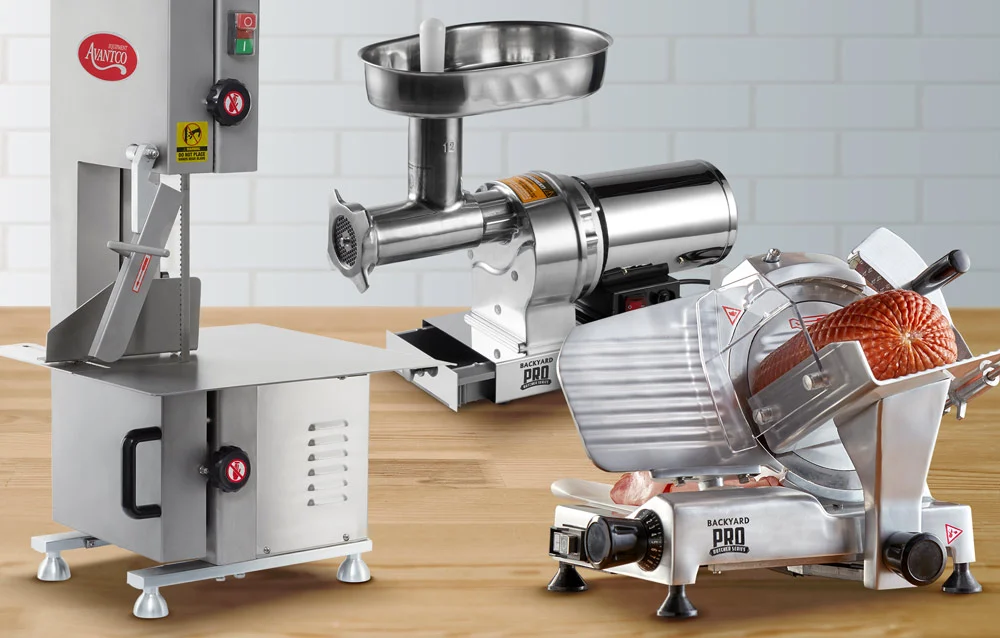
Modern food production depends on more than good recipes and quality ingredients. Consistency, food safety, labor efficiency, and production capacity all depend heavily on the machinery used throughout the process. Choosing the right commercial food processing equipment can help a facility maintain consistent output while reducing unnecessary waste and downtime.
Whether you operate a bakery, meat-processing facility, prepared-food plant, dairy operation, or large-scale commercial kitchen, equipment decisions should be based on your actual production requirements. Buying machinery simply because it has a higher capacity or more features can create unnecessary costs and operational problems.
What Is Commercial Food Processing Equipment?
Commercial food processing equipment refers to machinery designed to prepare, process, handle, cook, package, or preserve food products at a professional scale. Unlike equipment intended for household or small kitchen use, commercial machinery is built for frequent operation, larger production volumes, sanitation requirements, and demanding working environments.
Common examples include industrial mixers, slicers, grinders, food processors, conveyors, filling machines, ovens, fryers, blanchers, cutters, packaging machines, and refrigeration systems.
Different production stages require different equipment. For example, a facility producing frozen vegetables may need washing, cutting, blanching, freezing, and packaging equipment. A bakery may require mixers, dough sheeters, proofers, ovens, and cooling systems.
The objective is not simply to automate production. Good equipment should fit into the entire workflow without creating bottlenecks between processing stages.
How to Choose the Right Equipment Step by Step
Purchasing processing machinery is a significant operational decision. A structured evaluation can prevent expensive mistakes.
1. Define Your Production Requirements
Start by documenting what you actually produce and how much you need to process.
Consider:
- Production volume per hour or day
- Product dimensions and characteristics
- Required processing speed
- Number of production shifts
- Available floor space
- Labor requirements
- Cleaning procedures
- Future production targets
For example, a facility producing 500 pounds of prepared vegetables per shift has different requirements from one processing 5,000 pounds.
Avoid selecting equipment based solely on its maximum advertised capacity. Real-world throughput can vary depending on product characteristics, operator experience, cleaning intervals, and production conditions.
2. Map the Entire Production Workflow
Before buying individual machines, examine how materials move through your facility.
A typical workflow might look like:
Receiving → Washing → Preparation → Processing → Cooking → Cooling → Packaging → Storage
Each stage should connect logically with the next.
Suppose a cutting machine can process 2,000 pounds per hour, but the washing system handles only 1,000 pounds. The additional cutting capacity provides little practical benefit because the washing stage becomes the bottleneck.
Looking at the complete workflow helps identify where equipment will genuinely improve productivity.
3. Evaluate Food Safety and Sanitation
Food-processing machinery must support effective cleaning and sanitation.
Look for designs that minimize difficult-to-clean areas, unnecessary seams, exposed fasteners, and inaccessible components. Equipment should also be compatible with the cleaning chemicals and procedures used at your facility.
Sanitation is particularly important when processing products that can support bacterial growth or when switching between different product types.
For example, equipment used for raw meat requires careful consideration of cross-contamination risks. A machine that performs well mechanically may still be unsuitable if employees cannot clean it efficiently.
4. Consider Material and Construction
Construction materials affect durability, maintenance, and sanitation.
Stainless steel is widely used in food-processing environments because it is durable, corrosion-resistant, and relatively easy to clean. However, the appropriate material can vary depending on the application.
Consider the environment as well. Equipment exposed to moisture, salt, acidic ingredients, heat, or aggressive cleaning chemicals may require specialized construction.
5. Calculate Total Operating Cost
The purchase price is only one part of equipment cost.
Evaluate:
- Electricity or gas consumption
- Water usage
- Replacement parts
- Preventive maintenance
- Cleaning requirements
- Labor requirements
- Expected service life
- Installation costs
- Downtime risks
A cheaper machine may become more expensive over several years if it consumes excessive energy or requires frequent repairs.
For instance, an energy-efficient cooking system with a higher initial price may produce lower operating costs over its useful life.
Important Equipment Categories
Different processing operations call for different machinery.
Preparation equipment includes washers, peelers, cutters, slicers, grinders, and mixers. These machines prepare raw ingredients for subsequent processing.
Cooking equipment includes commercial ovens, steamers, kettles, fryers, and specialized heating systems. Temperature control is particularly important because inconsistent heating can affect both quality and food safety.
Material-handling equipment includes conveyors, pumps, lifts, and transfer systems. Efficient material movement can reduce unnecessary manual handling.
Packaging equipment may include fillers, sealers, labeling systems, vacuum packaging machines, and case-packing equipment.
Cooling and refrigeration systems help preserve products after cooking or processing. Cooling capacity should be evaluated carefully because insufficient cooling can disrupt the entire production schedule.
Common Mistakes and Challenges
One common mistake is buying for peak capacity without considering actual demand. Oversized machinery can consume valuable floor space and increase energy and maintenance costs.
Another problem is ignoring employee workflow. Equipment that requires awkward loading, frequent manual adjustments, or difficult cleaning can reduce productivity despite having impressive specifications.
Facilities also sometimes overlook maintenance access. A machine may fit perfectly into an available space but leave insufficient room for technicians to inspect, repair, or remove components.
Inadequate staff training is another frequent challenge. Even well-designed machinery can produce inconsistent results when operators do not understand setup, adjustment, sanitation, and basic troubleshooting.
Finally, businesses sometimes fail to consider future expansion. Equipment should not necessarily be oversized, but the overall production layout should allow reasonable opportunities for growth.
Practical Tips From an Operations Perspective
Start with measurable production data rather than assumptions. Record actual processing times, downtime, waste, labor requirements, and product volumes before replacing or adding machinery.
Run realistic trials whenever possible. Test equipment using the ingredients, recipes, temperatures, and production conditions your facility actually uses. Laboratory or demonstration performance may not perfectly represent daily production.
Standardize operating procedures after installation. Document machine settings, cleaning steps, inspection points, and routine maintenance tasks. This makes production more consistent and reduces dependence on individual operators.
Keep critical replacement parts available when downtime could significantly affect production. A relatively inexpensive spare component can sometimes prevent a long interruption.
Finally, review equipment performance periodically. Production requirements change as product lines, order volumes, staffing levels, and regulations evolve. A machine that was appropriate five years ago may no longer be the best fit today.
Conclusion
Choosing commercial food-processing machinery is ultimately an exercise in balancing productivity, safety, quality, labor, maintenance, and long-term operating costs. The best equipment is not necessarily the largest or most technologically advanced option. It is the equipment that fits the product, workflow, facility, and production goals.
By analyzing the complete processing line, evaluating sanitation and maintenance requirements, calculating total operating costs, and testing machinery under realistic conditions, food manufacturers can make better purchasing decisions and build more reliable production operations.