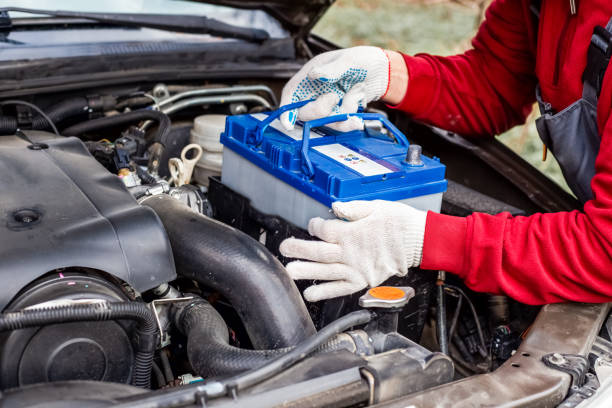
a car mechanic installs a battery in a car. Battery replacement and repair.
A vehicle’s battery is a critical component, powering the engine, electronics, and essential systems. Proper battery installs ensure reliability, prevent unexpected breakdowns, and extend the life of your vehicle. Whether performing a battery install at home or relying on on-site professional services, understanding the correct procedures and safety measures is crucial. Professional providers like J’S ROADSIDE SERVICES offer expert battery installs, ensuring your vehicle remains fully operational while minimizing risks.
Battery installs can seem straightforward, but improper installation can lead to electrical issues, damage to your vehicle, or personal injury. From selecting the right battery type to handling connections safely, vehicle owners need a clear understanding of the steps involved. Experienced technicians emphasize both preparation and precision to guarantee a smooth installation.
Whether you are a DIY enthusiast or someone who prefers professional assistance, following expert tips ensures a safe, efficient, and effective battery install. Being proactive about battery maintenance and installation also reduces the likelihood of being stranded due to a dead or improperly installed battery.
This guide will provide comprehensive advice on battery installs, including preparation, installation procedures, safety measures, common mistakes, and maintenance tips, enabling vehicle owners to handle this essential task with confidence.
Choosing the Right Battery for Your Vehicle
The first step in a successful battery install is selecting the correct battery for your vehicle. Key considerations include:
- Battery Type: Ensure compatibility with your vehicle’s make and model. Common types include lead-acid, AGM, and lithium-ion batteries.
- Cold Cranking Amps (CCA): Choose a battery with sufficient CCA to start your vehicle reliably in various weather conditions.
- Reserve Capacity (RC): A higher RC ensures longer power delivery during engine-off periods.
- Physical Size: Verify that the battery fits securely in the designated compartment.
- Warranty and Brand Reliability: Investing in a reputable brand reduces the risk of early failure and ensures better performance.
Selecting the right battery reduces installation errors, maximizes efficiency, and extends the lifespan of both the battery and your vehicle’s electrical system.
Preparing for a Safe Battery Install
Proper preparation is critical to ensure safety and avoid damage during a battery install. Essential steps include:
- Wear Protective Gear: Gloves and safety glasses protect against acid leaks and sparks.
- Turn Off the Engine: Ensure the vehicle is completely off and keys are removed to prevent electrical accidents.
- Identify Battery Terminals: Correctly identifying positive (+) and negative (-) terminals is essential to avoid reverse polarity damage.
- Disconnect the Negative Terminal First: This reduces the risk of short circuits and sparks during removal.
- Keep Tools Handy: Wrenches, battery terminal cleaners, and protective mats make the process smoother.
Preparation minimizes the chances of accidents and ensures a safe, efficient installation process whether at home or on-site.
Step-by-Step Guide to Installing a Battery
Proper installation techniques are key to successful battery performance. Follow these expert steps:
- Remove the Old Battery: Disconnect the negative terminal first, then the positive, and carefully remove the battery from the compartment.
- Clean the Battery Tray and Terminals: Remove corrosion, dirt, and debris to ensure a secure connection.
- Place the New Battery Correctly: Align the positive and negative terminals with the vehicle’s connections.
- Connect the Positive Terminal First: Tighten securely without over-torquing.
- Connect the Negative Terminal Second: Ensure a snug fit to complete the circuit safely.
- Check for Secure Fit: Verify that the battery is firmly in place to prevent movement during driving.
- Test the Battery: Start the vehicle and confirm proper operation of electronics and engine functions.
Following these steps ensures a successful battery install that avoids potential electrical problems or physical damage to the vehicle.
Common Mistakes to Avoid During Battery Installs
Even minor errors can lead to significant issues. Avoid these mistakes:
- Reversing Terminal Connections: Connecting the positive and negative terminals incorrectly can damage electronics.
- Skipping Terminal Cleaning: Corrosion can reduce battery efficiency and cause poor connections.
- Over-Tightening or Under-Tightening: Improper torque can damage terminals or cause loose connections.
- Ignoring Safety Precautions: Not wearing gloves or glasses increases the risk of injury.
- Using the Wrong Battery Type: Incompatible batteries can lead to poor performance or electrical issues.
Awareness of these common pitfalls ensures a safer, more effective installation process.
Benefits of Professional Battery Installs
While DIY battery installs are feasible, professional services offer added advantages:
- Expert Knowledge: Professionals understand vehicle-specific requirements and electrical systems.
- Proper Tools and Equipment: Specialized tools prevent accidental damage to the battery or vehicle.
- Time Efficiency: Professionals can perform installs quickly and accurately.
- Safety Assurance: Minimizes risk of sparks, acid exposure, or electrical shorts.
- Post-Installation Testing: Ensures battery performance and vehicle systems are functioning properly.
Relying on professional services like J’S ROADSIDE SERVICES guarantees a reliable battery install and peace of mind.
Maintaining Your Battery After Installation
After a successful battery install, maintenance is key to prolonging its lifespan:
- Regularly Inspect Terminals: Check for corrosion or loose connections.
- Keep Battery Clean and Dry: Dirt and moisture can lead to electrical issues.
- Monitor Battery Performance: Note slow starts or dim lights as potential early warning signs.
- Charge Properly: Avoid deep discharges and use a suitable battery charger if necessary.
- Schedule Routine Vehicle Checks: Include battery inspection in overall maintenance routines.
Proper maintenance ensures reliable performance and reduces the likelihood of unexpected roadside emergencies.
Conclusion
Battery installs are essential for vehicle reliability and safety. Whether performed at home or on-site, following proper procedures, taking safety precautions, and selecting the correct battery type ensures optimal performance and longevity. Avoiding common mistakes, maintaining the battery post-installation, and knowing when to rely on professional services can prevent costly damage and reduce stress. Professional providers like J’S ROADSIDE SERVICES offer the expertise, tools, and reliability to handle battery installs safely, giving vehicle owners confidence that their vehicle will start and perform efficiently every time. With careful preparation, attention to detail, and expert guidance, battery installs can be managed successfully and effectively.
FAQs
How often should I replace my vehicle battery?
Most car batteries last between 3–5 years, depending on usage, climate, and maintenance.
Can I perform a battery install myself safely?
Yes, with the right tools, preparation, and attention to safety guidelines, DIY installs are possible, though professional assistance reduces risk.
What is the correct order for connecting battery terminals?
Always connect the positive terminal first and the negative terminal second to prevent sparks and electrical shorts.
How can I prevent battery corrosion?
Clean terminals regularly, apply anti-corrosion sprays, and ensure tight, secure connections.
Are all batteries compatible with every vehicle?
No, vehicle-specific specifications must be followed, including type, size, and CCA ratings.