Mid-century modern furniture
For beginners, understanding this design style can make furniture shopping and interior decorating much easier. From identifying authentic design characteristics to selecting complementary colors and materials, there are several details worth considering before making a purchase. Mid-century modern interiors also offer flexibility, allowing homeowners to combine vintage-inspired pieces with contemporary accessories. This guide explores the history, defining features, popular furniture types, and practical ways to introduce this timeless aesthetic into modern homes.
Known for clean lines, natural materials, elegant shapes, and practical construction, this design movement brings together beauty and everyday comfort. Mid-century modern furniture has remained one of the most recognizable and appreciated interior design styles because of its simplicity, functionality, and timeless appearance. Whether someone is furnishing a new apartment, updating a living room, or searching for distinctive vintage pieces, this style offers plenty of inspiration. Its appeal comes from the ability to make interiors feel sophisticated without appearing overly decorated or complicated.
Understanding the History of Mid-Century Modern Design
Mid-century modern design became particularly influential during the period following World War II, gaining popularity from the mid-1940s through the 1960s. During these decades, changing lifestyles and advances in manufacturing encouraged designers to rethink traditional furniture styles. Instead of heavy furniture with elaborate carvings and decorative details, people increasingly embraced simpler designs that suited modern homes and everyday activities. The movement reflected a growing interest in practical living, efficient spaces, and accessible design.
Several influential designers helped establish the visual identity of this movement. Charles and Ray Eames, George Nelson, Eero Saarinen, and other creative figures introduced furniture that combined innovative construction with distinctive artistic forms. Their work demonstrated that practical household objects could also become attractive design statements. Scandinavian design traditions also contributed to the movement through an emphasis on craftsmanship, natural materials, and functional simplicity.
Another important development was the introduction of new manufacturing techniques and materials. Molded plywood, fiberglass, plastics, and lightweight metals allowed designers to experiment with shapes that were difficult to achieve using traditional construction methods. At the same time, natural woods such as teak, walnut, and oak remained popular because of their warmth and attractive grain patterns. These developments helped establish a design language that continues to influence contemporary furniture collections.
Key Characteristics That Define Mid-Century Modern Furniture
One of the easiest ways to recognize mid-century modern furniture is through its clean, uncomplicated appearance. Furniture pieces typically feature straight lines, gentle curves, balanced proportions, and carefully considered details. Rather than relying on excessive ornamentation, designers used the shape, texture, and construction of each piece to create visual interest. This approach makes the furniture attractive without overwhelming the surrounding space.
Tapered legs are another recognizable feature of this design style. Many sofas, dining tables, cabinets, and chairs stand on slim legs that angle slightly outward. This construction creates a lighter appearance and allows more visible floor space, which can make smaller rooms feel less crowded. Furniture with raised bases also contributes to the open and uncluttered atmosphere commonly associated with mid-century interiors.
Organic shapes and geometric forms frequently appear together. A coffee table might feature a rounded surface supported by a sculptural base, while a cabinet could combine rectangular storage compartments with subtle curved edges. This balance between structured and flowing forms gives the furniture its distinctive character. The overall objective is to create pieces that look visually interesting while remaining comfortable and practical for everyday use.
Popular Materials, Colors, and Finishes
Materials play an important role in creating the warmth and character associated with mid-century modern interiors. Natural wood is particularly important, with walnut, teak, oak, and rosewood frequently appearing in furniture designs. These materials provide attractive grain patterns, natural variations, and a sense of quality that works well with both neutral and colorful interiors. Wood finishes can range from light honey tones to deeper brown shades, depending on the overall design.
Alongside wood, designers experimented with materials such as metal, fiberglass, molded plastic, glass, and leather. Metal frames provided structural support while maintaining a lightweight appearance. Glass tabletops helped create an open visual effect, while upholstered seating introduced additional comfort and texture. Combining different materials can make a room feel more layered without sacrificing the simplicity that defines the style.
Color selection is equally important when decorating a mid-century-inspired space. Warm neutrals, cream, beige, brown, olive green, mustard yellow, and muted orange are commonly associated with this aesthetic. These shades work particularly well with natural wood finishes and understated upholstery. However, stronger colors such as teal, burnt orange, and deep blue can introduce personality when used thoughtfully. The key is to maintain balance rather than filling every corner with competing colors and patterns.
Choosing Mid-Century Dining Furniture for Your Home
The dining area is an excellent place to introduce this design style because dining furniture often combines functionality with strong visual appeal. Mid-century dining furniture typically features streamlined tables, comfortable chairs, warm wood finishes, and carefully balanced proportions. These characteristics make dining spaces feel inviting while maintaining an elegant and organized appearance. Even one distinctive dining table can establish the overall design direction of the room.
When selecting a dining table, consider its size, shape, material, and relationship with the available floor space. Rectangular tables are practical for larger households and traditional dining layouts, while round and oval designs can create a softer atmosphere. Walnut and teak finishes are particularly attractive choices for homeowners who prefer a warm, natural appearance. Before purchasing, measure the room and allow enough space for chairs to move comfortably around the table.
Dining chairs deserve equal attention because they influence both comfort and the overall appearance of the dining area. Look for designs with gently curved backs, tapered legs, supportive seats, and simple silhouettes. Upholstered options can provide additional comfort, while wooden or molded seats create a more understated appearance. Mixing different chair styles can also work when the pieces share complementary materials, colors, or proportions.
Storage furniture can complete the dining area without making it feel crowded. Sideboards, credenzas, and compact cabinets provide useful space for tableware, linens, and decorative accessories. A low-profile wooden sideboard can also serve as a display surface for artwork, ceramic objects, or a table lamp. Choosing pieces with coordinated finishes helps create a connected appearance throughout the room.
How to Incorporate Mid-Century Modern Style Into Contemporary Interiors
One of the biggest advantages of this design movement is its ability to complement different decorating styles. Homeowners do not need to replace every piece of furniture to create a mid-century-inspired interior. Instead, introducing a few carefully selected items can gradually transform the appearance of a room. A wooden coffee table, a sculptural armchair, or a streamlined sideboard can provide an effective starting point.
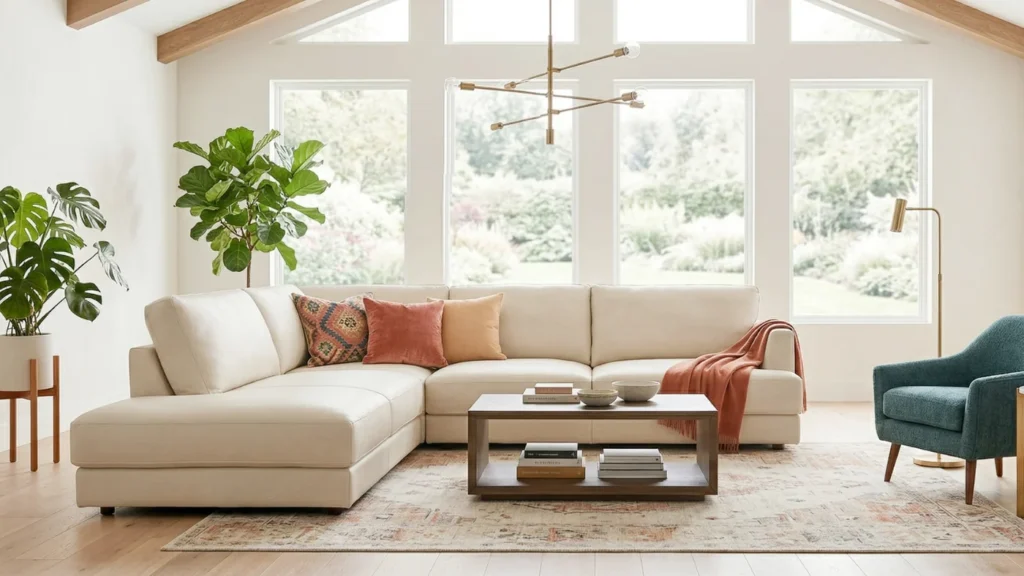
Begin by choosing a central furniture piece that establishes the room’s visual direction. In a living room, this might be a low-profile sofa with simple upholstery and wooden legs. In a dining area, a distinctive table paired with complementary chairs can become the main attraction. Once the primary furniture is selected, introduce supporting pieces that share similar proportions, materials, or finishes.
Lighting and accessories can help strengthen the overall atmosphere. Floor lamps with curved metal frames, understated pendant lights, geometric wall art, and ceramic decorative objects are suitable additions. Natural textures such as wool, cotton, leather, and woven materials can also soften the appearance of streamlined furniture. Plants provide another effective way to introduce organic shapes and bring additional warmth into the space.
It is important to avoid overcrowding the room with too many decorative objects. Mid-century interiors generally benefit from thoughtful spacing and furniture arrangements that allow individual pieces to stand out. Instead of displaying numerous accessories, select a few meaningful items that complement the furniture. This approach creates a more balanced interior and allows the distinctive design details to remain visible.
Tips for Buying Quality Vintage and Contemporary Furniture
Finding suitable furniture requires more than choosing pieces that look attractive in photographs. Buyers should consider construction quality, material condition, comfort, and long-term usability before making a decision. When shopping for vintage furniture, examine wooden joints, drawer mechanisms, table surfaces, upholstery, and structural stability. Small cosmetic imperfections may be acceptable, but serious damage or unstable construction can lead to expensive repairs.
It is also useful to understand the difference between original vintage furniture, licensed reproductions, and contemporary designs inspired by the movement. Original pieces come from the historical period, while reproductions recreate established designs using authorized manufacturing methods. Contemporary interpretations borrow recognizable characteristics but may introduce different dimensions, materials, or construction techniques. Understanding these distinctions helps buyers make informed decisions based on their preferences and budgets.
Material quality should remain a priority when comparing different options. Solid wood, quality veneers, durable upholstery, and properly finished metal components can contribute to a furniture piece’s longevity. However, the presence of a particular material does not automatically guarantee superior craftsmanship. Check how components are assembled, whether surfaces are properly finished, and whether the furniture is suitable for its intended use.
Before purchasing, consider how the piece will function within the existing home. A beautiful dining chair may not be the right choice if it lacks adequate support or does not fit comfortably beneath the table. Similarly, a large vintage sideboard might overwhelm a small dining area. Taking measurements, reviewing product specifications, and understanding maintenance requirements can prevent unnecessary purchases.
Why Mid-Century Modern Design Remains Timeless
The continued popularity of this design movement comes from its ability to combine visual simplicity with practical functionality. Its furniture does not depend on short-lived decorative trends or complicated styling techniques. Instead, balanced proportions, natural materials, and thoughtful construction create an appearance that can remain attractive for many years. These qualities make the style suitable for different generations, lifestyles, and types of homes.
Another reason for its lasting appeal is versatility. A mid-century-inspired chair can look equally attractive in a contemporary apartment, a traditional home, or a minimalist interior. Natural wood furniture can complement neutral walls, colorful artwork, textured fabrics, and modern lighting. This adaptability allows homeowners to update their surroundings without replacing their main furniture pieces whenever decorating preferences change.
Sustainability can also influence purchasing decisions. Choosing well-maintained vintage furniture gives existing pieces another useful life and may reduce the need for newly manufactured alternatives. Buyers can also prioritize durable contemporary furniture that is designed for long-term use rather than frequent replacement. Repairing, refinishing, and maintaining quality furniture can help preserve its appearance and usefulness over time.
Ultimately, mid-century modern furniture represents more than a recognizable decorating trend. It reflects an approach to design that values simplicity, craftsmanship, comfort, and purposeful construction. Beginners can explore this aesthetic gradually by understanding its defining characteristics and selecting pieces that genuinely suit their homes. Whether through a beautifully finished dining table, an elegant wooden sideboard, or a distinctive lounge chair, incorporating this timeless style can create interiors that feel welcoming, functional, and effortlessly sophisticated.