Every writer, student, editor, and marketer eventually asks the same question before hitting “publish” or “submit”: is this text really mine, and is it truly original? That question is exactly why a verificador de plagio online (online plagiarism checker) has become one of the most searched-for tools on the internet. Whether you’re finishing a thesis, publishing a blog post, or reviewing freelance work, an online plagiarism checker gives you the confidence that your content stands on its own.
This guide walks through what these tools actually do, why they matter, how to choose one, and how to use the results to make your writing genuinely stronger — not just “clean” by a algorithm’s standards.
What Is a Verificador de Plagio Online?
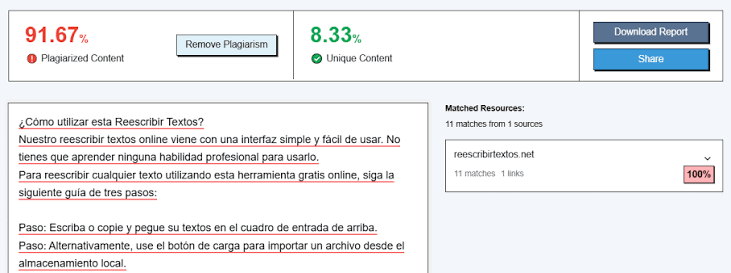
A verificador de plagio online is a web-based tool that scans a piece of text and compares it against a massive index of published material — websites, academic papers, books, and other online sources — to detect matching or closely paraphrased passages. Instead of manually searching sentence by sentence, the tool automates the comparison in seconds and returns a similarity report, usually expressed as a percentage, along with links to the sources it found.
The core idea is simple: originality builds trust. Search engines reward unique content, professors expect independent thinking, and readers deserve writing that adds something new rather than recycling what already exists.
Because Uniqueness Checks Are More Important Than Before
Content is being produced at a scale the internet has never seen before. Blogs, product pages, social captions, and academic papers are published every second, which makes accidental overlap more common than most writers realize. A phrase you thought you invented might already exist somewhere else simply because language patterns repeat naturally.
Here’s why running a check matters:
- Academic integrity — Universities routinely screen submissions, and unintentional overlap can still trigger serious consequences.
- SEO performance — Search engines actively de-prioritize duplicate or near-duplicate content, which can quietly sink an otherwise well-written page.
- Professional credibility — Publishers, agencies, and clients expect original work, and a plagiarism report is often part of the delivery process.
- Personal peace of mind — Even honest writers second-guess themselves. A quick scan turns that doubt into certainty.
How to Make the Most of a Plagiarism Report
Most plagiarism detection engines rely on a combination of techniques rather than a single method:
- Text fingerprinting — The tool breaks content into small chunks and creates unique digital “fingerprints” for each, then compares them against its database.
- Semantic analysis — Advanced checkers go beyond exact matches and look for paraphrased or reworded content that carries the same meaning as an existing source.
- Source indexing — The strength of any checker depends on the size and freshness of its database — the more sources it scans, the more reliable the result.
- Similarity scoring — Once matches are found, the tool calculates an overall percentage and highlights the specific passages involved.
Understanding this process helps explain why two different tools can return different scores for the same document — they’re drawing from different databases and using different sensitivity settings.
See more: verificador de plagio
Choosing the Right Online Plagiarism Checker
Not all tools are built the same, and picking the right one depends on what you need it for. Consider these factors:
- Database size and scope — Does it scan academic journals, the open web, or both?
- Accuracy and false-positive rate — A good tool flags real overlap without over-flagging common phrases or properly cited quotes.
- Speed and file support — Look for support for the file formats you actually use, whether that’s plain text, Word documents, or PDFs.
- Privacy policy — Check whether your submitted text is stored, shared, or used to train other systems — this matters especially for unpublished academic or business work.
- Readable reporting — A useful report doesn’t just give a number; it shows exactly which sentences matched and where they came from.
How to Use a Plagiarism Report Effectively
Getting a percentage score is only the first step. What you do next is what actually protects your work:
- Read the flagged passages in context. Sometimes a match is a properly cited quote or a common technical phrase, not real plagiarism.
- Rewrite, don’t just swap synonyms. True originality means restructuring the idea in your own voice, not shuffling a few words around.
- Cite deliberately. If you’re referencing someone else’s research or wording, attribute it clearly rather than trying to disguise it.
- Re-scan after edits. A second check confirms that your revisions actually resolved the overlap instead of just moving it around.
Common Myths About Plagiarism Checkers
A few misconceptions are worth clearing up:
- “A 0% score means perfect writing.” Not necessarily — originality doesn’t guarantee clarity, accuracy, or good structure. It only confirms the text isn’t copied.
- – ** “Everything inspectors use the same database.“** They don’t, which is why using multiple tools for cross-checking occasionally yields different outcomes.
- “Paraphrasing tools make plagiarism undetectable.” Semantic-aware checkers are specifically designed to catch reworded content that keeps the original meaning intact.
Final Thoughts
A verificador de plagio online isn’t just a gatekeeping tool — it’s a habit that supports better writing overall. It pushes you to think through ideas in your own words, cite sources honestly, and publish work you can stand behind. Whether you’re a student protecting your academic record, a blogger protecting your search rankings, or an editor protecting a client’s reputation, running one final originality check before you publish is a small step that prevents much bigger problems down the line.
Originality isn’t about passing a scan — it’s about producing something worth reading because it genuinely came from you.
See more blogs: Visit Here